
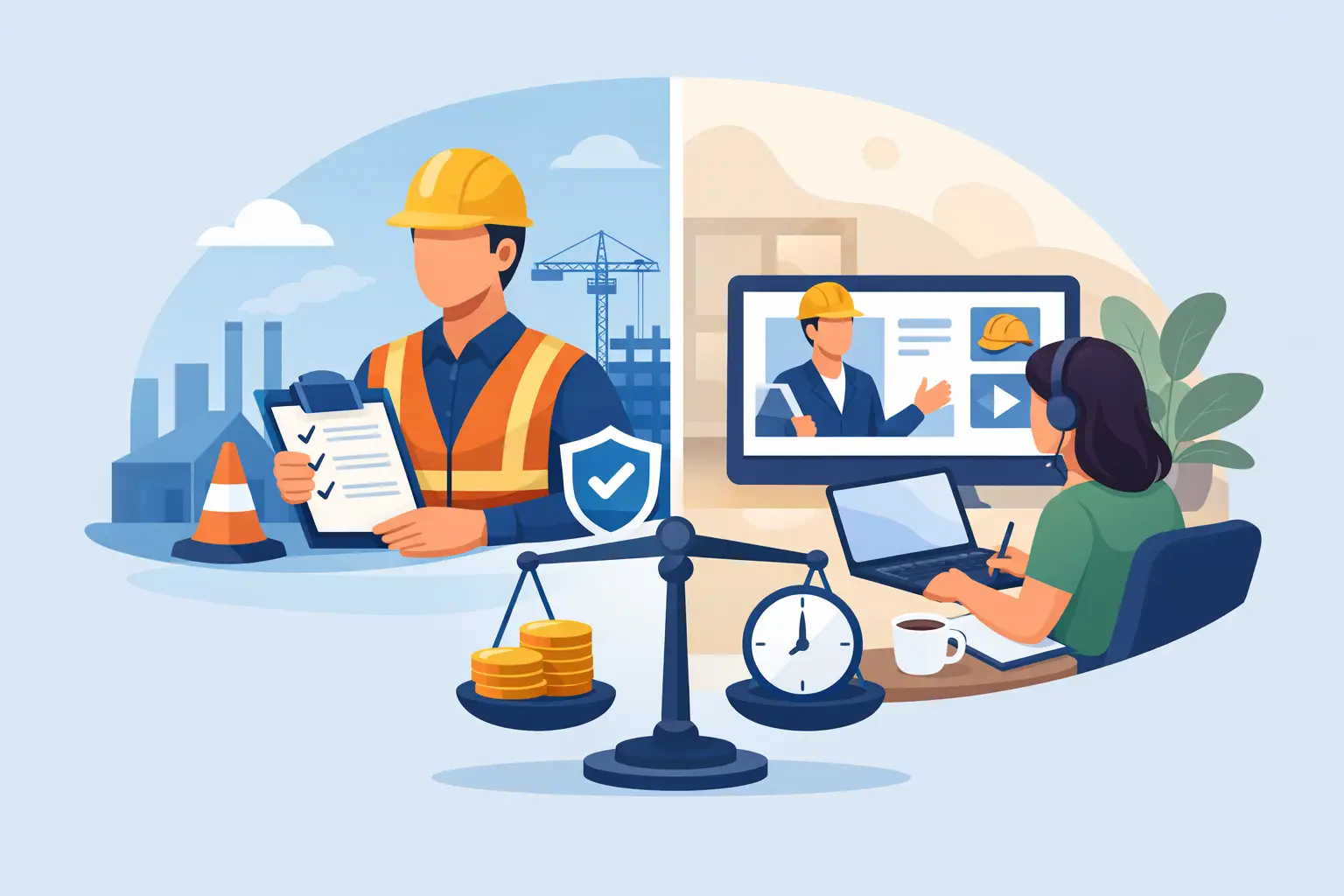
A lot of safety training gets treated like a box to check. That is usually where people make the wrong decision. If you are comparing OSHA 30 training online options, the real question is not just how fast you can finish. It is whether the course fits your role, your schedule, and the kind of job sites or workplaces where safety knowledge actually affects your next opportunity.
What OSHA 30 training online actually covers
OSHA 30 is a longer-form outreach training program designed for workers who need a broader understanding of workplace safety responsibilities. It is commonly associated with supervisors, foremen, safety leads, and experienced workers, but job requirements vary by employer and industry.
The course is generally offered in two primary tracks: construction and general industry. That distinction matters. If you work on active construction sites, the construction version is usually the relevant fit. If your work is tied to manufacturing, warehousing, healthcare support operations, distribution, or other non-construction environments, general industry may make more sense.
The 30-hour format goes beyond basic awareness. It typically covers hazard recognition, worker rights, employer responsibilities, fall protection, personal protective equipment, electrical safety, walking-working surfaces, hazard communication, and incident prevention practices. Specific topics depend on the industry version and training provider, so it is worth checking the course outline before you enroll.
Who should take OSHA 30 instead of OSHA 10
This is where many buyers get stuck. OSHA 10 is often positioned as an entry-level option, while OSHA 30 is more comprehensive and better suited for workers with greater responsibility. If you are managing crews, overseeing compliance, training others informally, or moving into a lead role, OSHA 30 may carry more value.
That said, more hours do not automatically mean better for every learner. If your employer only requires OSHA 10 and your role is truly entry level, the 30-hour course may be more training than you need right now. On the other hand, if you are thinking about promotion, bidding for better jobs, or strengthening your resume for higher-responsibility positions, OSHA 30 can be a smart move.
For adult learners balancing work and career growth, the difference often comes down to trajectory. OSHA 10 helps you get started. OSHA 30 can help you look ready for the next step.
Why people choose OSHA 30 training online
Flexibility is the obvious advantage, but it is not the only one. Online training gives working adults more control over pace, timing, and study conditions. If your schedule changes weekly, if you work overtime, or if you are fitting training around family obligations, a self-paced format is easier to complete than a fixed in-person class.
There is also a practical cost angle. Online courses can reduce travel time, scheduling friction, and lost work hours. For employers, that can make team training easier to coordinate. For individuals paying out of pocket, it can make career-focused compliance training more accessible.
Another reason online delivery works well is repetition. In a classroom, once the instructor moves on, that section is gone. In a digital course, you can revisit modules, slow down on technical content, and absorb the material in smaller sessions. For learners who have been out of school for a while, that matters.
The trade-offs to understand before you enroll
Online does not mean effortless. A 30-hour course is still a commitment, and the self-paced format can work against you if you keep postponing it. Some learners prefer the accountability of a live classroom because it forces completion. If you know you tend to start strong and stall, choose a provider experience that is organized and easy to navigate.
You also need to make sure you are selecting the right course for the right reason. OSHA outreach training is valuable, but it is not the same thing as OSHA certification for every regulated role, and it does not replace employer-specific site training. Some jobs require additional credentials, refreshers, or task-specific instruction.
That is why the buying decision should be tied to your actual employment goal. Are you meeting a hiring requirement? Preparing for supervisory work? Building a stronger safety background for a resume update? The answer changes what matters most in the course you choose.
How to evaluate an OSHA 30 training online course
Start with legitimacy. You want a course that is built for the correct industry track and aligned with recognized OSHA outreach expectations. Then look at usability. A well-structured course helps you move through modules clearly, track progress, and finish without confusion.
After that, evaluate fit. Some learners want the lowest price. Others care more about platform quality, support, or having access to a broader learning marketplace where safety training can sit alongside project management, operations, leadership, or compliance courses. If your career path is expanding beyond one requirement, that broader value becomes more attractive.
Price matters, but context matters more. A cheaper option that is hard to use or poorly matched to your role is not a better investment. A practical platform should help you move from course selection to completion without wasting time.
OSHA 30 training online for career mobility
For many workers, this training is not only about compliance. It is also about positioning. Safety knowledge signals reliability, readiness, and awareness of workplace standards. In competitive hiring environments, those signals matter.
If you are applying for construction leadership roles, warehouse supervision, facilities oversight, field operations positions, or jobs where safety culture is taken seriously, OSHA 30 can support your credibility. It will not replace hands-on experience, but it can strengthen how employers view your preparedness.
This is especially useful for career changers and early-stage supervisors. When you do not yet have years of leadership titles on your resume, recognized training can help close the gap between where you are now and the jobs you want next.
When OSHA 30 makes the most sense
The strongest cases for enrollment usually fall into a few categories. You are required by an employer or contract to complete it. You are moving into a supervisory or lead position. You work in an environment where hazard recognition is central to performance. Or you want to build a more competitive profile for future applications.
It can also make sense if you are building a broader skill stack. A learner who is combining safety training with project management, operations, construction administration, or compliance-focused coursework is often making a more strategic investment than someone chasing one isolated credential at a time.
That is where a broad online education platform can be useful. Instead of treating training as one-and-done, you can organize learning around where your career is headed. Horizons Unlimited, for example, fits this access-focused model by giving adult learners room to pair practical courses with larger credential pathways when they are ready.
What to expect from the learning experience
Most learners should expect to complete the course over multiple sessions rather than in one stretch. That is usually better for retention anyway. Safety topics are easier to apply when you have time to process them, connect them to your workplace, and return with fresh attention.
You should also expect some sections to feel more relevant than others depending on your industry. That is normal. The value of the course is in the total framework it gives you - how hazards are identified, how responsibilities are shared, and how safer work practices are reinforced across a team.
If you approach the course only as a requirement, you will probably finish it. If you approach it as a practical asset for better jobs and better decision-making, you are more likely to use what you learn.
Is OSHA 30 training online worth it?
For the right learner, yes. It is worth it when the course supports a real job requirement, a promotion path, or a broader effort to become more competitive in safety-sensitive roles. It is also worth it when online delivery is the difference between completing the training and putting it off indefinitely.
It may be less compelling if your role only calls for basic awareness training and you have no immediate need for the longer format. The best choice depends on where you are in your career and what employers in your field actually expect.
If your next move depends on proving you take workplace safety seriously, OSHA 30 training online is more than convenient. It is a practical way to turn time spent learning into stronger positioning for the work ahead.