
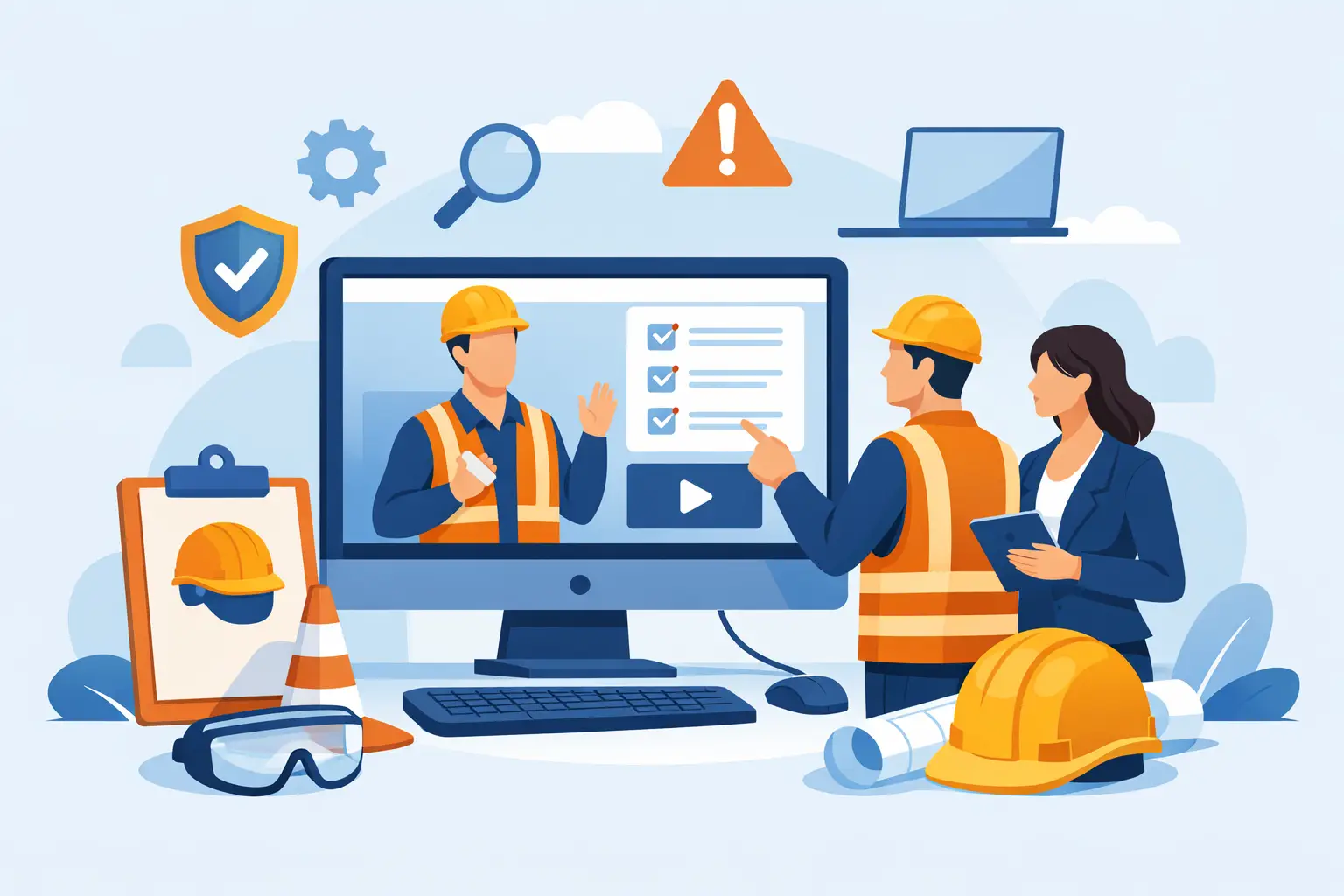
If you need job-ready safety training without rearranging your workweek, osha safety courses online can be a smart move. The catch is that not every online course delivers the same value. Some are built for fast awareness training, while others are designed to meet OSHA outreach requirements and support roles in construction, general industry, warehousing, manufacturing, or site supervision.
For working adults, that difference matters. You are not shopping for content alone. You are choosing a course that should match your job, your employer’s expectations, your timeline, and the kind of credential or proof of completion you actually need.
Why osha safety courses online are in demand
Safety training has shifted online for the same reason many career-focused programs have - flexibility wins. Employees can complete required learning around shifts, managers can assign training across teams, and job seekers can build a more credible application without waiting for an in-person class to open nearby.
That convenience does not mean every course serves the same purpose. Some online safety classes are introductory and useful for general workplace awareness. Others are tied to OSHA Outreach Training and may lead to an official DOL card when taken through an authorized provider. If your goal is promotion, onboarding, contractor compliance, or a safer transition into a new role, knowing that distinction up front saves time and money.
There is also a practical career angle. Safety knowledge supports more than compliance. It can strengthen your readiness for frontline roles, lead positions, and operations environments where employers expect workers to understand hazard communication, fall protection, PPE, recordkeeping basics, and incident prevention. For many learners, this is not just about checking a box. It is about becoming easier to hire and more reliable on the job.
What OSHA online training can and cannot do
Online OSHA training works well for knowledge delivery. It is effective for explaining standards, common hazards, worker rights, employer responsibilities, and prevention practices. It is especially useful when the training objective is awareness, orientation, or broad foundational understanding.
Where it depends is hands-on skill development. If your work involves equipment operation, confined spaces, lockout-tagout procedures, or site-specific emergency response, an online course may need to be paired with employer-led practical training. A strong provider will make that clear instead of implying that one course solves every compliance requirement.
That trade-off is not a drawback so much as a reality check. The best buying decision comes from matching the training format to the workplace outcome. If you need flexible theory-based learning, online can be ideal. If you need demonstrated physical competency, online may be one part of a larger training plan.
How to evaluate OSHA safety courses online
The first question is simple: what are you trying to achieve? If you need broad workplace awareness, many short online safety courses can help. If your employer requires OSHA 10 or OSHA 30, or if a contract specifically asks for an OSHA card, you need to verify that the course is offered through an authorized outreach provider and applies to the right industry track.
Construction and general industry are the most common paths, and choosing the wrong one creates avoidable delays. Construction typically fits trades, jobsite work, and contractor environments. General industry is more common for manufacturing, warehousing, logistics, healthcare support settings, and other operational workplaces. Some learners assume one is interchangeable with the other. It usually is not.
You should also review course scope. A strong program will clearly state the topics covered, expected seat time, completion requirements, and whether you receive a certificate of completion, an OSHA DOL card, or both where applicable. Vague listings are a warning sign. If the provider cannot explain the credential outcome in plain language, keep looking.
Support matters more than many buyers expect. Adult learners often need help with enrollment, course access, deadlines, and selecting the right track. A platform that combines clear program organization with responsive guidance is usually a better fit than a marketplace that leaves every decision to the buyer. That is especially true if you are balancing work, family, and a deadline tied to onboarding or promotion.
Common course types and who they fit best
Short-form workplace safety courses are often the fastest option for learners who need general awareness. These can be useful for office teams, entry-level workers, administrative staff who support compliance functions, or anyone who wants a practical introduction to safety language and workplace risk reduction.
OSHA 10 is typically chosen by entry-level workers and job seekers who need foundational training. It is often requested in construction, warehousing, and operational roles where employers want a baseline understanding of common hazards and safe work practices.
OSHA 30 usually fits supervisors, team leads, forepersons, managers, or workers moving toward greater responsibility. It goes deeper into hazard recognition and prevention and can carry more weight when you are trying to stand out for leadership-track roles.
Industry-specific add-on training can also be valuable. Topics like bloodborne pathogens, hazard communication, forklift awareness, fall protection, and PPE training may not replace broader OSHA outreach courses, but they can sharpen your profile for a specific environment. For some learners, the most effective path is not one large purchase. It is a focused sequence of courses aligned to the jobs they actually want.
Red flags to avoid before you enroll
The biggest red flag is confusion around credentials. If a course description blurs the line between general safety education and OSHA-authorized outreach training, pause there. Buyers should never have to guess whether they are paying for awareness content or a program tied to a recognized OSHA card outcome.
Another issue is poor course transparency. You should be able to confirm pricing, time requirements, access period, device compatibility, and learner support before checkout. Hidden requirements create friction, especially for adults who need predictable progress.
Be cautious with promises that sound bigger than the course itself. No provider can guarantee a job simply because you completed a safety class. Good training can improve your readiness, confidence, and employability, but hiring still depends on role fit, experience, and employer standards. Credible education providers speak to opportunity without overstating results.
Choosing a platform that fits working adults
For busy learners, the best platform is not just the one with the lowest sticker price. It is the one that makes enrollment straightforward, course categories easy to compare, and next steps obvious. That means practical filters, clear descriptions, accessible support, and options that fit different budgets and timelines.
This is where a broader online learning marketplace can make sense. If safety training is one part of a larger career plan, it helps to study in an environment where you can also build adjacent skills in operations, compliance, business, project management, or software tools used in the workplace. Horizons Unlimited reflects that kind of access-oriented model by bringing together career-focused online learning in one place, so learners can move from immediate training needs to longer-term advancement without starting from scratch somewhere else.
There is also value in bundle thinking. If you are preparing for a role change, safety training alone may not be enough. Pairing it with leadership, communication, reporting, or industry software courses can strengthen your profile in a way that feels more complete to employers. The right investment depends on your target role, but the broader point stays the same: training works better when it connects to a real job path.
A practical way to make your decision
Start with the employer or role requirement. Identify whether you need awareness training, OSHA 10, OSHA 30, or an industry-specific course. Then confirm the right industry track, the credential outcome, and whether the provider offers support if questions come up during enrollment or completion.
After that, compare delivery and access. Self-paced learning is usually the best fit for working adults, but only if the platform is easy to use and the course stays organized. Finally, consider what comes next. If this training is part of a promotion plan or career transition, choose a platform that can support the next skill you will need, not just the one you need this week.
The best osha safety courses online are not simply convenient. They are clear, credible, and aligned with the work you want to do next. Choose with that standard in mind, and your training becomes more than a requirement - it becomes a practical step toward better opportunities.