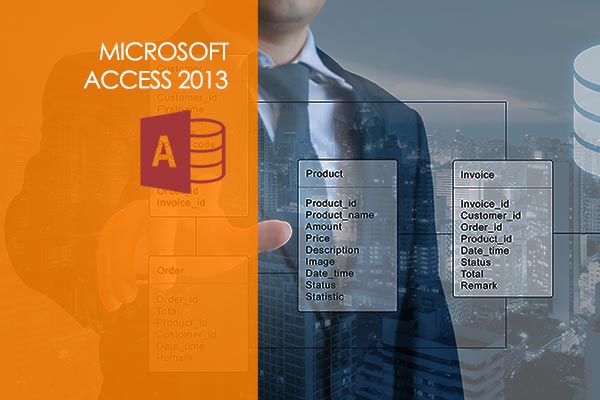
Course Information
Website Name: Horizons Unlimited
Course Name: Microsoft Access 2013 Online Course
Training Format: Online, On-Demand Video Instruction
This Microsoft Access 2013 Training course explains how to store data locally and publish databases online so authorized users can access information through a web browser. Microsoft Access databases support the storage of nearly any type of data, including inventory records, contact lists, operational processes, and organizational workflows.
Total Duration: 5 Hours 46 Minutes
Total Videos: 31 On-demand Videos
Closed Captions: Available
Topics Covered: 3 Core Topics
Practice Support: 59 Preparation Questions
Certificate: Certificate of Completion
Even though this Microsoft Access 2013 Online Course is based on an older version, it remains a valuable and relevant resource for professional online training and foundational database skill development.
Included in This Course
5 hours and 46 minutes of instructor-led video training
31 professionally produced on-demand video lessons
Closed captions for accessibility and flexible learning
59 preparation and review questions
Certificate of completion upon finishing the course
Instruction covering beginner, intermediate, and advanced Access 2013 features
Practical guidance for building, managing, and securing databases
Full Course Outline
ACCESS 365 2013 COURSE
Access Introduction
1.1 Access 2013 Introduction
1.2 What Are Databases
1.3 The Interface Window
1.4 Setting Up The Database Part 1
1.5 Setting Up The Database Part 2
1.6 Creating Forms
1.7 Understanding Table Relationships
1.8 Introduction To Queries
1.9 Introduction To Reports
Access Intermediate
2.1 Introduction Table Tools Intermediate
2.2 Table Tools Part 2
2.3 Table Tools Part 3
2.4 Forms And Design Intermediate Part 1
2.5 Forms And Design Intermediate Part 2
2.6 Forms Data Entry Part 1
2.7 Forms Data Entry Part 2
2.8 Queries
2.9 Reports From Queries Part 1
2.10 Reports From Queries Part 2
2.11 Reports From Queries Part 3
2.12 Specialized Form
Access Advance
3.1 Advance Introduction And Subforms
3.2 Subforms
3.3 Additional Types Of Queries
3.4 Form And Macros Part 1
3.5 Form And Macros Part 2
3.6 Advance Forms
3.7 Reports Advance Part 1
3.8 Reports Advance Part 2
3.9 Updating Reports
3.10 Customization And Conclusion
Microsoft Access 2013 Online Course – Detailed Course Article
Database Management with Microsoft Access 2013
Microsoft Access 2013 functions as a powerful database application designed to organize, store, and analyze information efficiently. The Microsoft Access 2013 Online Course explains how this tool combines a relational database engine with a graphical user interface to support structured data management across various industries.
Access databases support tasks ranging from inventory tracking and contact management to process monitoring and operational reporting. This course explains how structured database systems improve accuracy, reduce duplication, and provide reliable access to information.
Understanding Databases and Their Role
Databases form the backbone of organized information systems. This Microsoft Access 2013 Online Course explains what databases are, how relational databases function, and why structured data storage matters.
Tables, records, and fields are introduced to explain how information is stored logically. Understanding these concepts supports accurate database design and long-term scalability.
Navigating the Access 2013 Interface
The interface window serves as the control center for database creation and management. This course explains the Access workspace, including navigation panes, ribbons, and object views.
Efficient navigation improves productivity when managing tables, forms, queries, and reports. Familiarity with interface elements ensures smoother workflow and fewer errors during database development.
Setting Up Databases Correctly
Database setup determines long-term usability. The Microsoft Access 2013 Online Course explains how to plan and create databases correctly from the beginning.
Topics include defining fields, choosing data types, and organizing tables to support accurate data entry and retrieval. Proper setup prevents structural issues that can limit database functionality later.
Creating and Using Forms
Forms serve as the primary interface for data entry and viewing. This course explains how to create forms that simplify data input while maintaining consistency and accuracy.
User-friendly forms reduce data entry errors and make databases accessible to non-technical users. Access 2013 supports form customization to match organizational workflows.
Table Relationships and Data Integrity
Understanding table relationships is critical for relational databases. This Microsoft Access 2013 Online Course explains how relationships connect tables through keys and enforce data integrity.
Properly defined relationships prevent duplicate data and ensure accurate reporting across related datasets.
Introduction to Queries
Queries extract meaningful information from databases. This course explains how to create queries that filter, sort, and calculate data efficiently.
Queries serve as the foundation for reports and business intelligence. Learning query logic improves analytical capabilities and supports informed decision-making.
Introduction to Reports
Reports present data in a structured, readable format. This course explains how reports transform raw data into actionable insights.
Well-designed reports support management decisions, operational analysis, and professional documentation.
Intermediate Table Tools and Design
The Microsoft Access 2013 Online Course expands into intermediate table tools, explaining advanced table management techniques.
Topics include refining table design, optimizing field properties, and maintaining consistent data structures for multi-user environments.
Advanced Form Design and Data Entry
Intermediate and advanced form design improves usability. This course explains enhanced form layouts, controls, and data entry features.
Specialized forms support complex workflows and ensure accurate data capture across departments.
Query Expansion and Reporting from Queries
Queries become more powerful when used as data sources for reports. This course explains how to generate reports directly from queries.
Advanced reporting techniques allow users to present filtered, calculated, and summarized data effectively.
Advanced Access Concepts and Subforms
Subforms enable hierarchical data representation. The Microsoft Access 2013 Online Course explains how subforms display related data within a single interface.
Advanced concepts support scalable database systems that handle complex relationships.
Macros and Automation
Macros automate repetitive tasks and enhance productivity. This course explains how macros function within Access forms.
Automation reduces manual errors and improves consistency across database operations.
Advanced Forms and Reporting
Advanced form and report customization improves usability and presentation quality. This course explains layout control, formatting options, and report updates.
Professional reports support accurate communication of database insights to stakeholders.
Database Security and Permissions
Security remains a critical database concern. This Microsoft Access 2013 Online Course explains how to protect databases using permissions and access controls.
Understanding security limits ensures sensitive information remains accessible only to authorized users.
Importing Data and External Sources
Access supports importing data from external sources. This course explains how to integrate data from other systems into Access databases.
Data integration supports centralized information management and improved reporting accuracy.
Practical Applications of Microsoft Access 2013
Microsoft Access 2013 supports a wide range of real-world applications. Office managers, executive assistants, project leaders, and families benefit from structured data systems.
The Microsoft Access 2013 Online Course equips users with skills applicable across administrative, operational, and analytical roles.
Skill Development for Beginners and Experienced Users
This course supports beginners new to database concepts and experienced users seeking refined skills. Instruction progresses logically, ensuring consistent learning without unnecessary complexity.
Participants gain confidence handling data-related tasks and improving organizational efficiency.
Long-Term Value of Access Training
Database fundamentals taught in this Microsoft Access 2013 Online Course remain applicable across newer versions and other database platforms.
Strong database skills support accuracy, efficiency, and informed decision-making in professional environments.
Frequently Asked Questions (FAQ)
1. What skills are covered in the Microsoft Access 2013 Online Course?
The course covers database creation, tables, forms, queries, reports, relationships, macros, and security permissions.
2. Is this course suitable for beginners?
Yes, the course starts with database fundamentals and progresses through intermediate and advanced Access 2013 features.
3. Does the course include advanced database topics?
Yes, advanced topics include subforms, macros, advanced queries, and report customization.
4. Are practice questions included?
Yes, the course includes 59 preparation questions to reinforce understanding.
5. Will I receive a certificate after completion?
Yes, a certificate of completion is provided after finishing the course.
6. Is Microsoft Access 2013 still relevant?
Yes, the core database concepts taught remain relevant across modern Access versions and database systems.

.jpg "Horizons 600 X 400 Px 1764089009 Dwcpw (1)")